

Fans following the CBA playoffs have been captivated by the fierce Beijing-Guangdong showdown. Few expected that Zeng Fanbo, who was initially ruled out for the season due to injury, would not only take the court but also deliver a stunning performance that shifted the momentum of the series. The new quarterfinal format has brought more upsets and drama than ever before, and this matchup perfectly showcased the intensity and pressure of the revamped system.

The CBA quarterfinals have adopted a best-of-three series, leaving no room for error. According to Sina Sports, the probability of lower-seeded teams eliminating favorites has nearly doubled compared to previous seasons. Strong teams can no longer rely on experience to slowly find their rhythm; one mistake or an off-night can end their campaign in an instant. This relentless pressure tests every team’s resilience.
Shenzhen advanced smoothly, sweeping Zhejiang in two games. Shenzhen finished the regular season with a 30-12 record, ranking third in the standings, while Zhejiang held a 27-15 mark but lacked the depth and consistency. After a tied first quarter, Shenzhen pulled away in the second and extended their lead to nine points by the end of the third. Zhejiang mounted a late rally in the final period, cutting the deficit to five, but Shenzhen held firm to secure their semifinal spot.
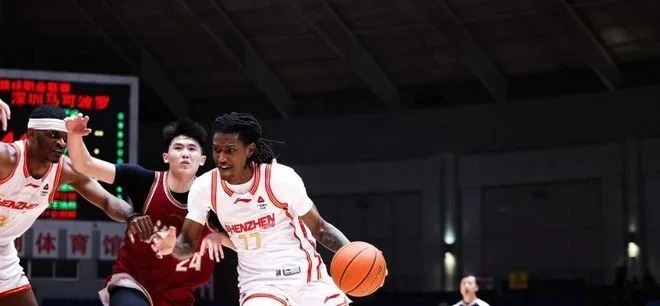
For Zhejiang, reaching the quarterfinals marked a successful season, fitting their role as spoilers. Shenzhen, having locked in their berth early, had more time to rest and prepare, making their advancement look effortless.
The Beijing-Guangdong series, however, was a different story. Every possession was a battle, with both teams fighting as if their season depended on it. In Game 1 at Beijing’s home court, the hosts controlled the tempo, using sharp outside shooting and tenacious defense to dismantle Guangdong’s schemes. Beijing drilled 16 three-pointers—five more than Guangdong—giving them a 15-point advantage from beyond the arc alone. With the perimeter clicking, Beijing’s inside game also flourished, as Zeng Fanbo and his teammates repeatedly attacked the paint, leaving Guangdong scrambling for answers.
This isn’t the first time Guangdong has been overwhelmed when opponents hit outside shots and push the pace. During the regular season, Fujian overcame a deficit on Guangdong’s home floor by finding their range in the second half, snapping a 15-year home winning streak for the Tigers. Whenever opponents heat up from deep and accelerate the tempo, Guangdong struggles to adjust, often leading to mental lapses and even emotional outbursts from head coach Du Feng.
What made Zeng Fanbo’s performance even more remarkable was that he played through a fracture of the left transverse process of his lumbar spine. Many assumed his season was over after doctors recommended two to three months of rest, yet he gritted through the pain to return. In just over 24 minutes, he tallied 23 points on 6-of-8 shooting, including 5-of-7 from three-point range, and made all six free throws, posting a plus-minus of +16.
Guangdong had not specifically prepared for Zeng Fanbo, and his unexpected heroics completely unraveled their defensive scheme. He not only provided a spark off the bench but also disrupted the entire defensive structure, becoming the defining factor in the game. After the game, his comments were straightforward: focus on defense, unity, and fighting for every possession. Grit and tenacity are what separate winners from losers, and Zeng Fanbo embodied that perfectly.
Under the new format, Beijing now holds the advantage in the series. Game 2 will be played in Dongguan, and a win would send Beijing directly to the semifinals. If Guangdong can respond, the series will return to Beijing for a decisive Game 3. This battle tests not only individual skills but also the team’s collective spirit and the coach’s adjustments.
Can Zeng Fanbo sustain his explosive output while dealing with injury? Can Du Feng shore up Guangdong’s perimeter defense and steady his players’ nerves? These are the key questions heading into Game 2. With Shenzhen and Shanghai already securing semifinal berths, Guangsha and Shanxi, as well as Beijing and Guangdong, are still locked in tight battles. Guangsha rebounded to level their series, regaining the initiative.
Guangdong survived with a game-winning shot to keep their hopes alive, but the path to advancement is now far more difficult. Compared to Shenzhen’s smooth ride, Guangdong’s series remains uncertain heading into Game 2 or even Game 3. Everything is on the line: a loss at home would end their season, a devastating blow to the franchise.
This high-stakes clash has everything to offer. First, can Beijing maintain their team-oriented style and can the resilient Zeng Fanbo keep up his production? Second, can Guangdong devise a new approach to break through, with better defensive rotations and timely three-point shooting? Third, can both teams shed the pressure and fight to the final whistle? The outcome is impossible to predict until the last second.
The new format has upended the traditional power structure. Whether veteran powerhouses or rising dark horses, every team must give their all to move forward. Who could have imagined that some favorites would fall short of the semifinals, while others emerge from the pack to write new stories? The clash between tradition and new contenders is in full swing, and every game could rewrite the narrative of the entire season.
The season is far from over, and anything can happen. Who will withstand the cruel pressure of the new format, seize their destiny, and become the ultimate champion? The court will provide the answer.
Source: Sina Sports, CBA Playoff Quarterfinal Analysis