
If Arsenal lift the Premier League title this season, manager Mikel Arteta’s iPad notes from May 2026 may become legendary. For the first time in 22 years, Arsenal find themselves in control of a title race heading into mid-May—accomplished after overcoming a difficult April that saw two league defeats and a dip in momentum.
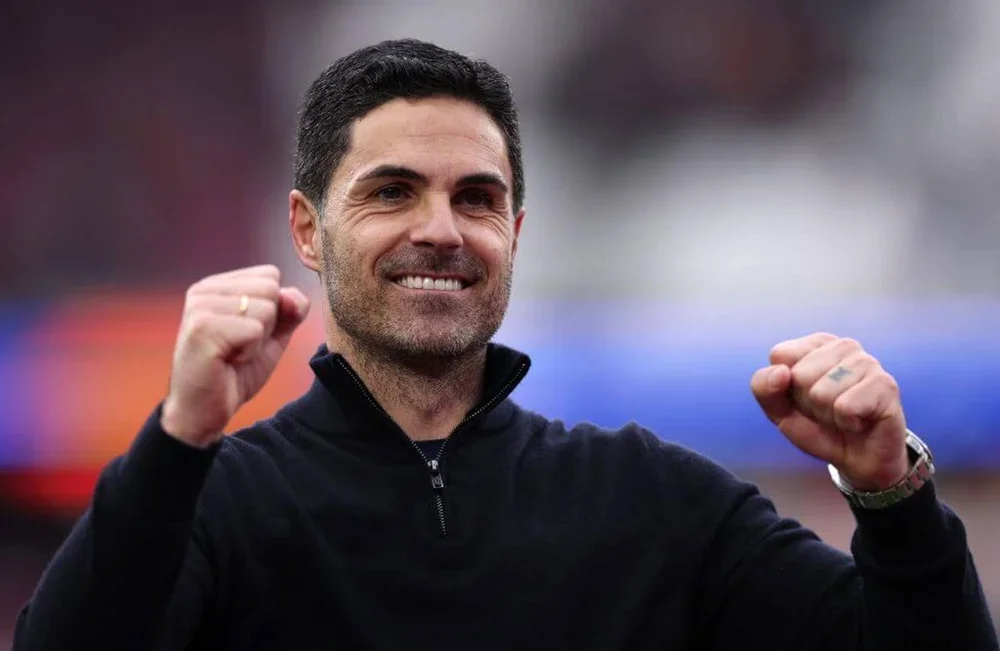
After a 3-0 win over Fulham at home to start May, Arteta ignited a nine-day stretch that included a Champions League final berth and a commanding position in the Premier League. The shift began with a bold tactical move: deploying Myles Lewis-Skelly in midfield and Riccardo Calafiori at left-back. That unlocked a fluency that saw Arteta name an unchanged lineup for consecutive matches—only the second and third times all season—against Atlético Madrid in the Champions League semi-final second leg and then West Ham on Sunday.
“If you see my iPad, the amount of line-ups I’ve done and changed… in the end, it was my gut feeling,” Arteta said after the Atlético game. “I had such a good feeling from what I saw a few days ago against Fulham.” That intuition was rewarded as the Emirates crowd fully embraced the football on display, creating a visceral roar at half-time with Arsenal three goals up. The energy shift was palpable, reminiscent of the noise when news filtered through of Manchester City’s draw at home to Nottingham Forest back in March.
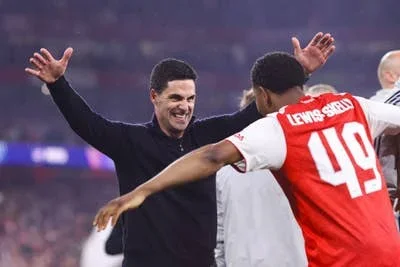
Against Fulham, the home crowd’s reaction confirmed to Arteta that his gut feeling was correct. Against Atlético three days later, Lewis-Skelly and Calafiori again provided balance alongside Leandro Trossard, whose comfort in dropping deep created fluidity on the left flank—something not seen consistently since autumn when Calafiori and Trossard started eight straight matches together.
But when Ben White went down injured after 26 minutes against West Ham, Arteta had to rely on his instincts once more. “If you do what you feel, at least you have the certainty that you’ve done the preparation,” Arteta told reporters ahead of the match. At the London Stadium, he decided to move Declan Rice from midfield to right-back and bring on Cristhian Mosquera, though the change immediately proved problematic. Arsenal’s right side became vulnerable, and the attacking balance suffered. Arteta quickly recognized his error, and after 22 minutes, he made another adjustment: bringing on Martin Ødegaard and Kai Havertz as two attacking midfielders.
“Sometimes you have to make another change,” Arteta said. “The one on Zubi [Zubimendi] was tough, but I really felt that we had to put two attacking midfielders to generate issues, and thank God it worked out.” Ødegaard, who has played only 39% of Premier League minutes this season but ranks among Arsenal’s top creators per 90 minutes, delivered a match-winning assist in the 102nd minute—his sixth league assist of the season, joint-top at the club with Trossard.
Arteta’s willingness to correct mistakes quickly and act on intuition has defined this crucial period. In his first title race against Manchester City, he showed reluctance to make changes that sapped momentum. But two months ago, he replaced a struggling Bukayo Saka with Noni Madueke, who won a penalty away to Bayer Leverkusen. Now, with two league matches and a Champions League final remaining, Arteta’s gut has set him right more often than not, steering Arsenal closer to history.